Basha Report’s Substack

Basha Report’s Substack

The Battle for Control Without a War

UAE and Saudi-Backed Forces Shape the Current Military Balance in Hadramawt

Mohammed Albasha's avatar
Mohammed Albasha
Dec 19, 2025
∙ Paid
No photo description available.
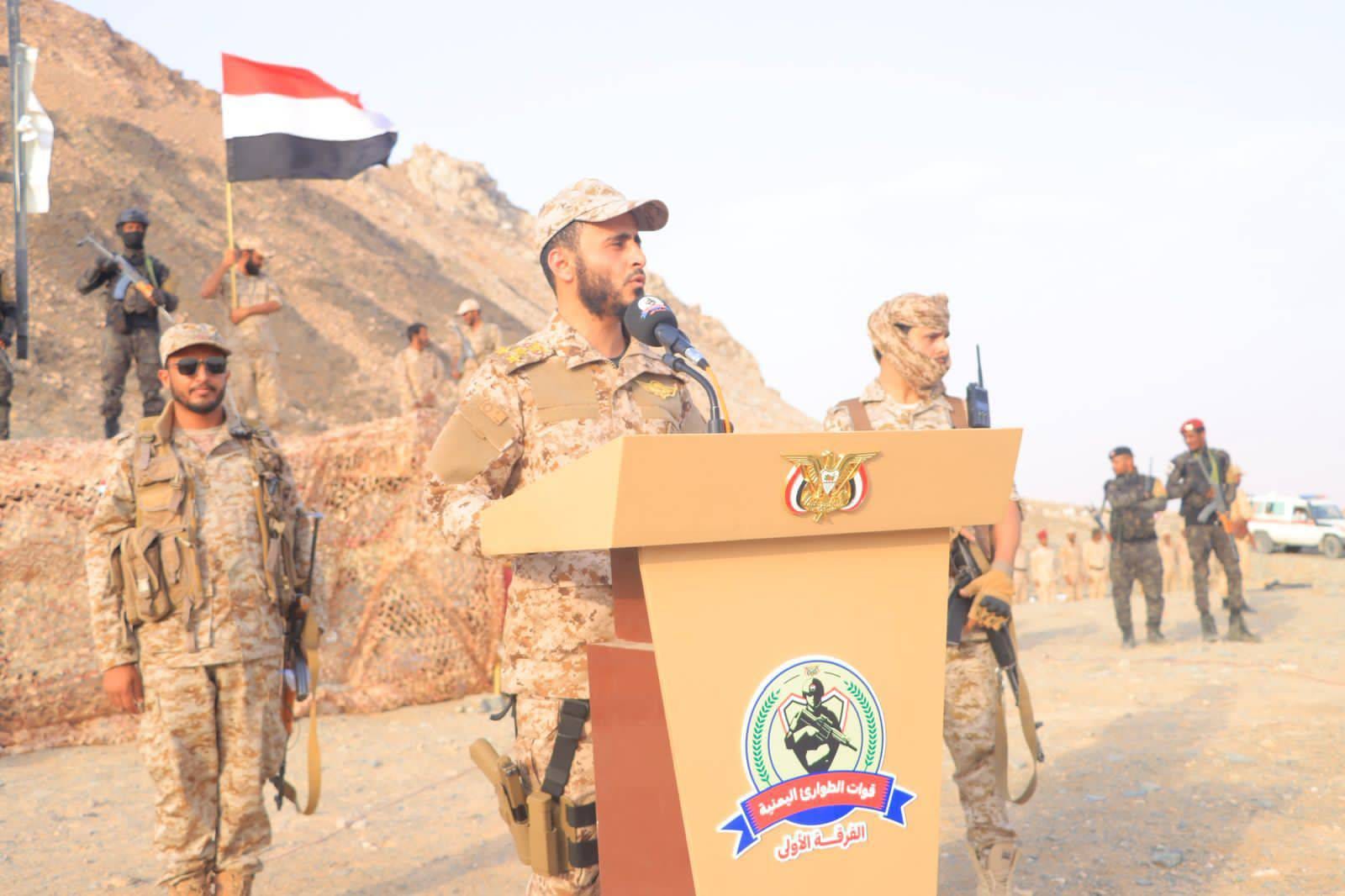
If fighting breaks out with the STC, one of the key Saudi-backed commanders would be Brigadier General Yasser bin Abdullah al-Maʿbari. He commands the 1st Emergency Division and is a young Salafi officer who also oversees the Azal Axis, a border front between Houthi-controlled areas of northwestern Saʿdah Governorate and Saudi-backed forces in Baqim District, Saʿdah.

Since 2016, resource-rich Hadramawt has shifted from a peripheral security zone to a central arena influencing the future of southern Yemen. What distinguishes Hadramawt from other theaters is not the presence of a single dominant actor, but the convergence of two parallel military systems, each backed by a regional power, each claiming legitimacy, and each seeking to impose a durable security reality without triggering direct confrontation.
النخبة الحضرمية تدفع بتعزيزات عسكريّة لحماية المنشآت الوطنية السيادية  ومكتسبات حضرموت - Crater News
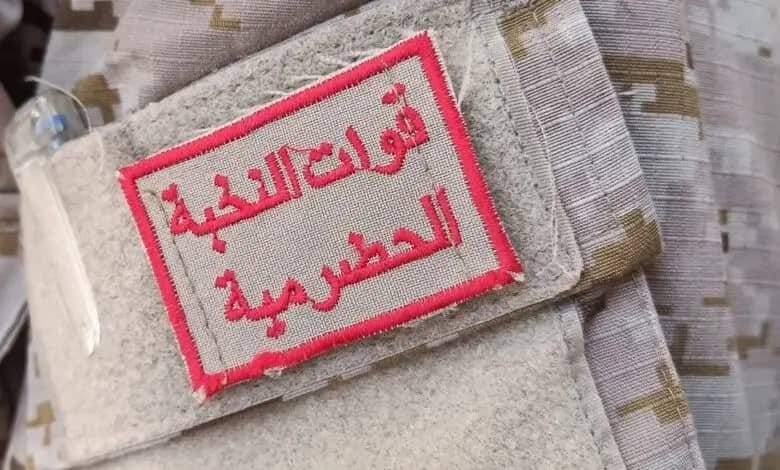
Patch of the Hadhrami Elite Forces (HEF), a UAE-backed Yemeni unit formed in 2016. They participated in the coalition campaign that helped recapture Mukalla from AQAP in 2016 with support from Saudi and UAE forces, and broader backing from the U.S.-led counterterrorism effort.

On one side stands the UAE-backed Southern Transitional Council (STC) and the broader southern military structure it has managed and consolidated under the framework of the southern forces. On the other side are the Saudi-backed forces, primarily the National Shield Forces (NSF) and the Yemen Emergency Forces (YEF), reinforced by local Hadrami armed formations attempting to block unilateral dominance by the STC in eastern Yemen.
May be an image of one or more people and beard
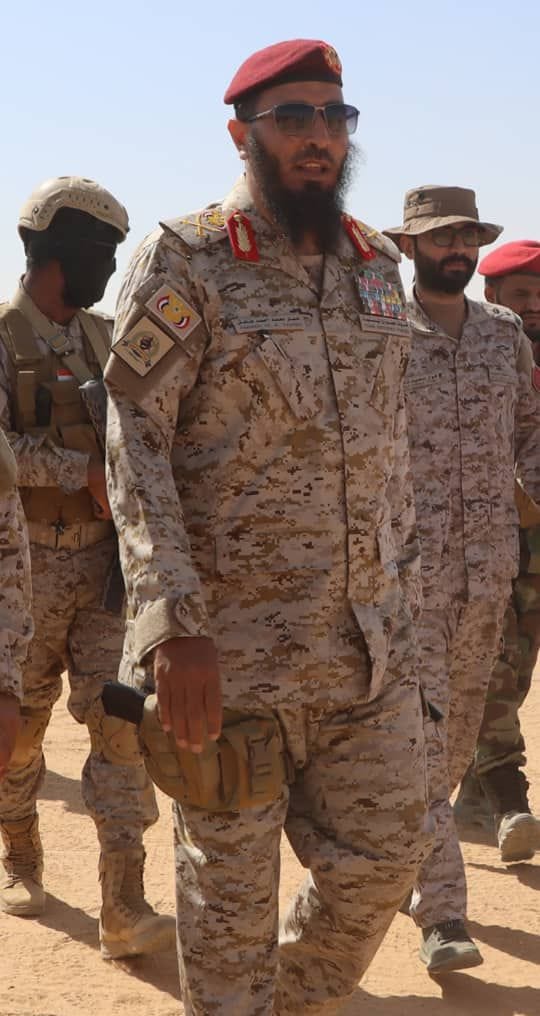
The first released image of Brigadier General Ammar Tamesh, commander of the 3rd Division of the YEF, reflects a broader trend among Saudi-backed, Salafi-leaning commanders. Due to religious and cultural norms that discourage personal imagery and self-promotion, such figures often avoid early or public photographs, favoring anonymity and institutional representation over individual visibility.

Methodology: For this report, we conducted key interviews with active military officers with knowledge of southern areas of operations involving both UAE- and Saudi-backed forces. We also drew on open-source intelligence (OSINT), including satellite imagery, video analysis, and public reporting, to develop, to the best of our knowledge, the closest possible approximation of the order of battle. This includes assessments of the composition and disposition of forces, such as unit formations, estimated force size, locations, command structures, and key personnel. These elements are outlined in the sections below.

Basha Report’s Substack is a reader-supported publication. To receive new posts and support my work, consider becoming a free or paid subscriber.

User's avatar

Continue reading this post for free, courtesy of Mohammed Albasha.

Or purchase a paid subscription.
© 2025 Mohammed Albasha · Privacy ∙ Terms ∙ Collection notice
Start your SubstackGet the app
Substack is the home for great culture